

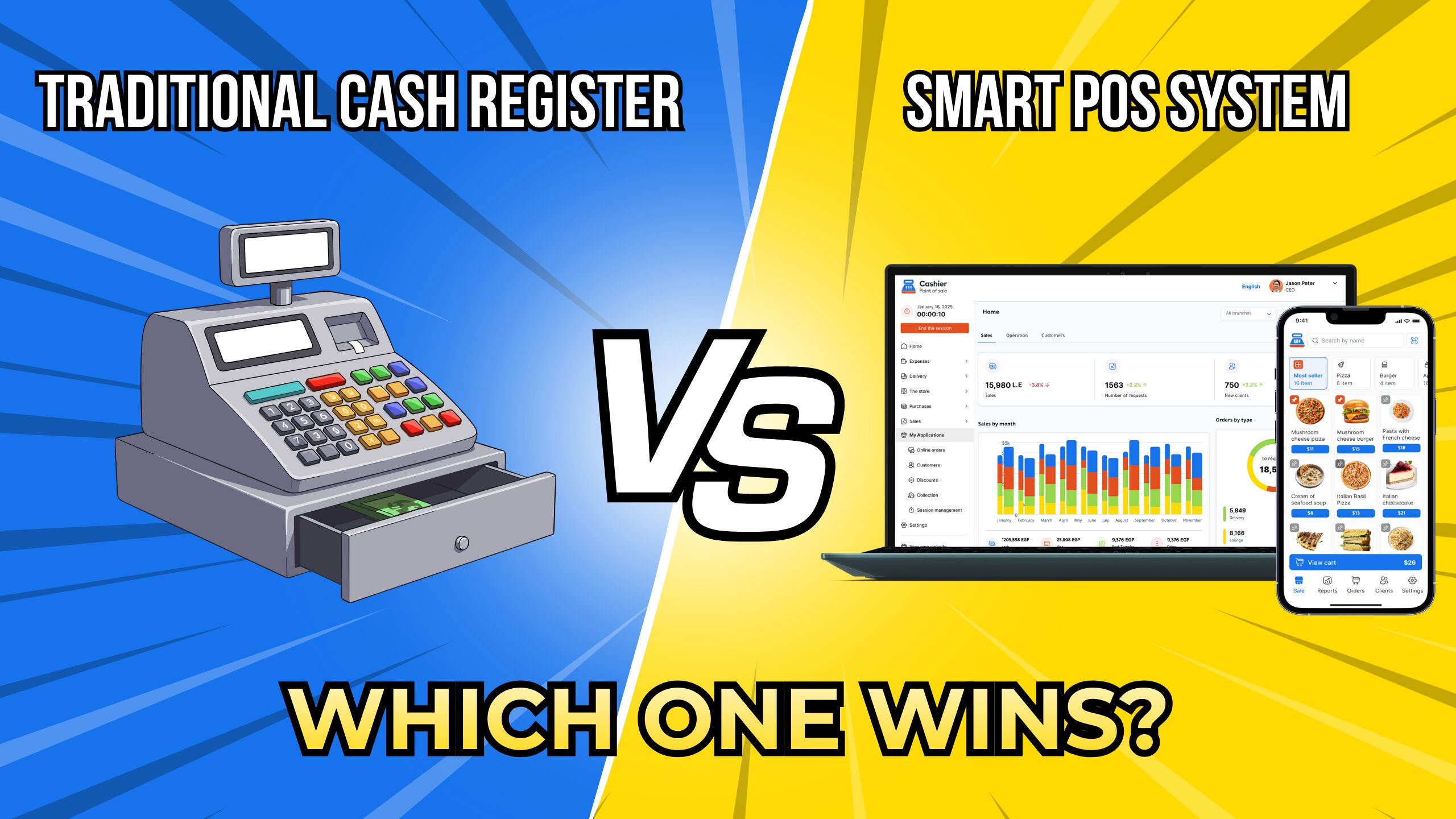
For decades, traditional cash registers were the backbone of retail and restaurant transactions. They recorded sales, opened cash drawers, and printed receipts, simple, reliable, and familiar. However, as customer expectations and business operations have evolved, so has point-of-sale technology. Today, smart POS systems are rapidly replacing traditional cash registers, offering advanced features that go far beyond basic transactions.
This article explores the difference between traditional cash registers and smart POS systems in detail. We’ll compare functionality, cost, scalability, reporting, security, and real-world business impact. By the end, you’ll understand why modern businesses are adopting smart POS technology and how solutions like Cashier POS are shaping the future of retail and hospitality.
Organize your sales in seconds with Cashier POS!
Take control of sales and users in moments, and give your business a fully integrated system that runs smoothly.
Get Started For FreeWhat Is a Traditional Cash Register?
A traditional cash register is a mechanical or electronic device designed primarily to process sales transactions. Its core purpose is to calculate totals, store cash securely, and generate receipts.
Key Features of Traditional Cash Registers
- Manual or basic electronic item entry
- Limited product categorization
- Cash drawer and receipt printer
- Simple daily sales totals
- Minimal or no inventory tracking
Traditional cash registers are often standalone systems. They do not connect to the internet, external software, or cloud platforms, making them suitable for very small businesses with straightforward needs.
Limitations of Traditional Cash Registers
While reliable, traditional cash registers have significant limitations:
- No real-time reporting
- Manual inventory updates
- No customer data tracking
- Limited scalability
- High risk of human error
As businesses grow or expand to multiple locations, these limitations become increasingly costly and time-consuming.
What Is a Smart POS System?
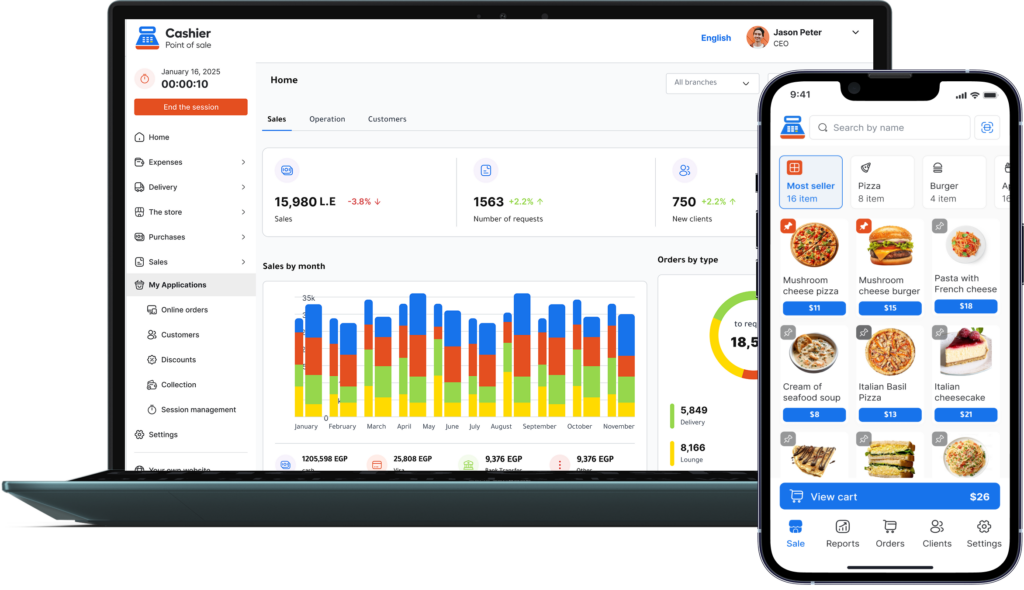
A smart POS system is a modern, software-driven point-of-sale solution that combines hardware, cloud technology, and business management tools into a single platform. Unlike traditional cash registers, smart POS systems act as a central hub for sales, inventory, staff, and customer data.
Core Features of Smart POS Systems
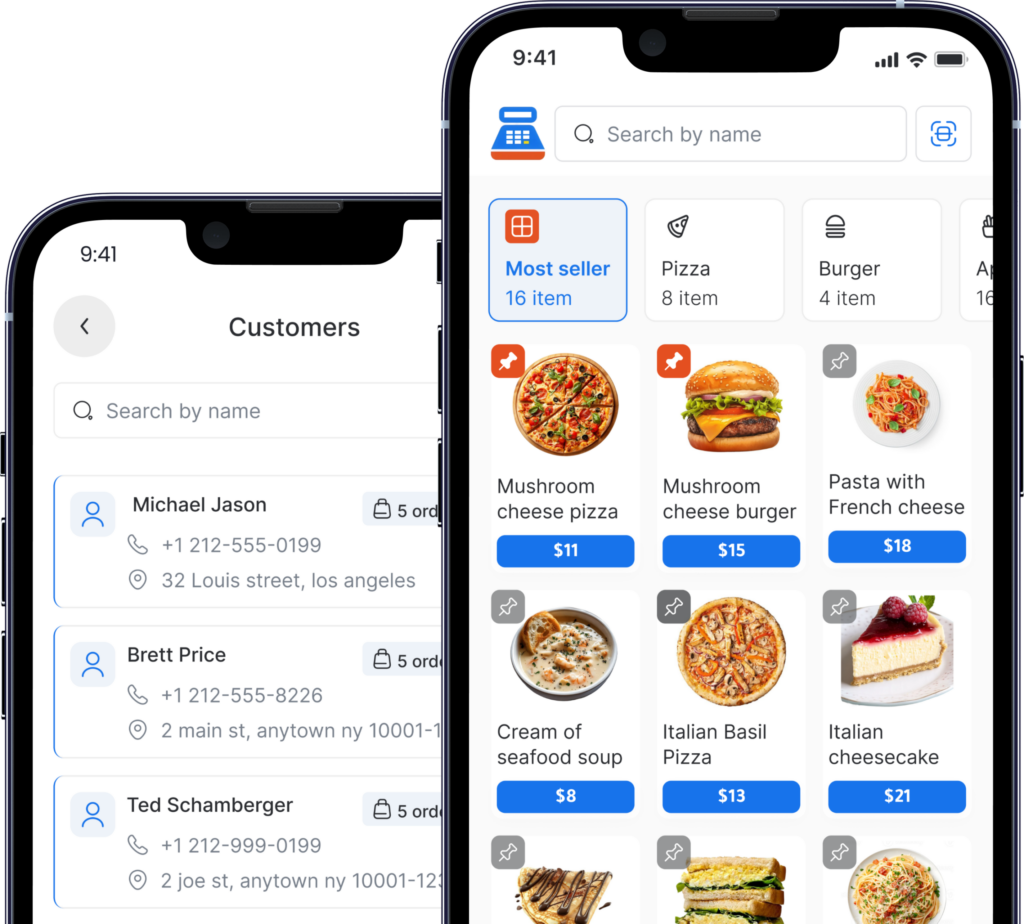
- Digital product catalogs
- Real-time sales tracking
- Cloud-based reporting and analytics
- Inventory management
- Customer relationship management (CRM)
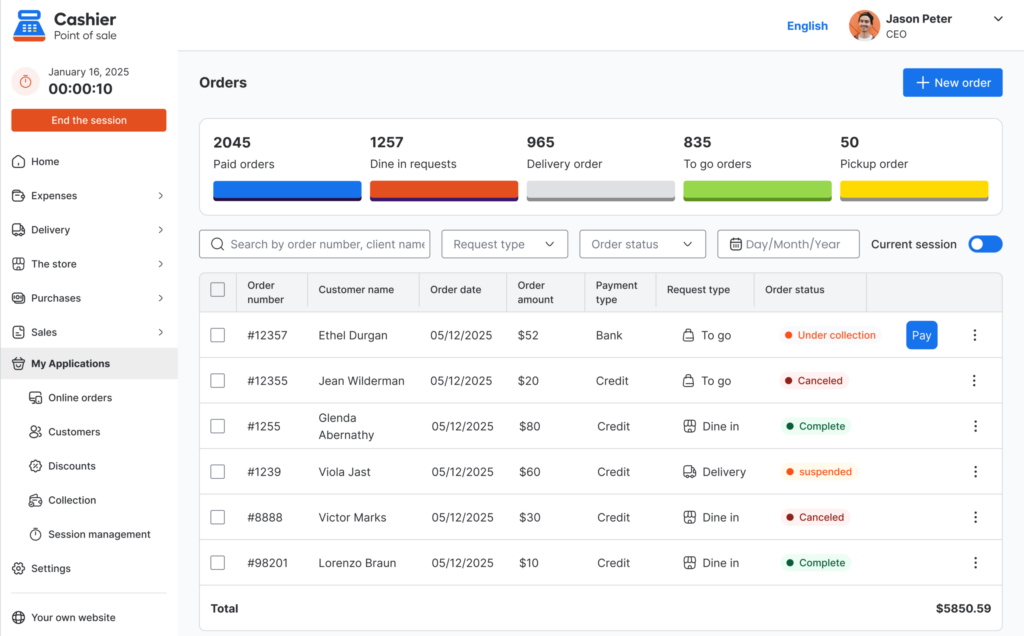
- Multi-payment support (cash, cards, wallets)
- Online and offline POS functionality
Smart POS systems are designed to adapt to modern business needs, offering flexibility, automation, and data-driven insights.
Traditional Cash Registers vs Smart POS Systems: A Detailed Comparison
1. Functionality and Flexibility
Traditional cash registers focus on basic transactions. Smart POS systems, on the other hand, provide end-to-end business management.
Smart POS systems allow businesses to:
- Customize menus and product lists
- Apply discounts and promotions automatically
- Integrate with accounting and eCommerce platforms
- Manage multiple stores from one dashboard
This flexibility is essential for businesses operating in competitive markets.
2. Inventory Management
Inventory tracking is one of the biggest differences between traditional cash registers and smart point of sale systems.
Traditional Cash Registers:
- Inventory tracked manually
- No low-stock alerts
- High risk of stock discrepancies
Smart POS Systems:
- Automatic inventory deduction per sale
- Real-time stock updates
- Low-stock notifications
- Supplier and purchase tracking
With a smart POS system, inventory decisions are based on accurate data rather than guesswork.
3. Reporting and Analytics
Traditional cash registers typically offer basic daily totals. Smart POS systems provide advanced analytics.
Smart POS reporting includes:
- Hourly, daily, and monthly sales reports
- Best-selling products
- Peak business hours
- Staff performance analysis
- Profit and margin insights
These insights empower business owners to make informed strategic decisions.
4. Cost and Long-Term Value
At first glance, traditional cash registers may seem cheaper. However, they often cost more over time.
Traditional Cash Registers:
- Higher upfront hardware cost
- Limited lifespan
- Costly upgrades or replacements
Smart POS Systems:
- Lower hardware dependency
- Software updates included
- Scalable pricing models
- Reduced operational costs
A free POS system like Cashier POS offers businesses a powerful solution without high upfront investment.
5. Scalability and Business Growth
Traditional cash registers are not designed to scale. Expanding to new locations often requires purchasing separate systems with no centralized control.
Smart POS systems support:
- Multi-branch management
- Centralized reporting
- Unified inventory across locations
- Remote access from any device
This scalability makes smart POS systems ideal for growing restaurants, supermarkets, and retail chains.
6. Customer Experience
Modern customers expect fast, seamless, and flexible checkout experiences.
Traditional Cash Registers:
- Limited payment methods
- No customer profiles
- Slower checkout during peak hours
Smart POS Systems:
- Multiple payment options
- Digital receipts
- Loyalty programs
- Personalized offers
Smart POS systems help businesses build long-term customer relationships.
7. Security and Data Protection
Security is a critical concern for any business.
Traditional cash registers rely heavily on physical security. Smart POS systems use digital safeguards such as:
- User access controls
- Encrypted data storage
- Cloud backups
- Activity logs
These features reduce theft, fraud, and data loss risks.
8. Online and Offline Capabilities
One major advantage of modern smart POS systems is offline functionality.
Cashier POS works both online and offline, allowing businesses to continue selling even during internet outages. Once the connection is restored, data syncs automatically.
Traditional cash registers lack this seamless data synchronization.
Why Businesses Are Switching to Smart POS Systems
The shift from traditional cash registers to smart POS systems is driven by several powerful market and operational factors that are reshaping how businesses operate:
- Increased competition, forcing businesses to operate faster, smarter, and more efficiently
- Demand for data-driven decisions based on real-time sales, inventory, and customer insights
- Need for operational efficiency to reduce manual tasks, errors, and wasted resources
- Rising customer expectations for faster checkout, multiple payment options, and personalized experiences
Beyond these drivers, smart POS systems also support long-term digital transformation. They automate repetitive processes, centralize business data, and provide actionable insights that were impossible with traditional cash registers. By reducing manual work, minimizing human errors, and improving visibility across operations, smart POS systems directly contribute to higher profitability, better cash flow management, and sustainable business growth.
Why Choose Cashier POS?
Cashier POS is a free POS system built for restaurants, supermarkets, and retail businesses of all sizes. It combines ease of use with powerful features, making it an ideal alternative to traditional cash registers.
Key Benefits of Cashier POS
- Free point of sale system
- Online and offline POS support
- Available on mobile, desktop, and web
- Real-time reporting and analytics
- Inventory and staff management
By replacing traditional cash registers with Cashier POS, businesses gain efficiency, visibility, and control.
Organize your sales in seconds with Cashier POS!
Take control of sales and users in moments, and give your business a fully integrated system that runs smoothly.
Get Started For FreeFrequently Asked Questions (FAQ)
A traditional cash register handles basic transactions, while a smart POS system manages sales, inventory, staff, and customer data in one platform.
Yes. Many smart POS systems, including Cashier POS, are designed specifically for small and medium-sized businesses.
Yes. Modern systems like Cashier POS support offline POS operations with automatic data synchronization.
Yes. By providing insights, faster checkout, and better inventory control, smart POS systems help increase sales and reduce costs.
Conclusion
The difference between traditional cash registers and smart POS systems is more than just technology, it’s about how businesses operate, grow, and compete. While traditional cash registers may still serve very small operations, they lack the flexibility, insights, and scalability required in today’s market.
Smart POS systems offer real-time data, advanced inventory management, improved customer experience, and long-term cost savings. Solutions like Cashier POS empower businesses to move beyond basic transactions and embrace smarter, more efficient operations.
For businesses looking to future-proof their operations, switching from a traditional cash register to a smart POS system is no longer optional, it’s essential.