

Choosing the best free restaurant management POS system is one of the most important decisions a restaurant owner can make. In today’s competitive food service industry, relying on manual processes or outdated cash registers can limit growth, reduce efficiency, and negatively impact customer satisfaction.
A modern Free POS System does more than process payments. It integrates sales, inventory, staff management, reporting, and customer engagement into one unified platform. Whether you operate a small café, a quick-service restaurant, a food truck, or a full-service dining establishment, selecting the right POS App can directly influence your profitability and scalability.
This comprehensive guide explains how to evaluate and choose the best free restaurant POS system to support your restaurant’s growth. You will learn what features matter most, how online and offline POS systems work, and why solutions like Cashier POS are transforming restaurant management.
Organize your sales in seconds with Cashier POS!
Take control of sales and users in moments, and give your business a fully integrated system that runs smoothly.
Get Started For FreeWhy Restaurants Need a Modern POS System
The restaurant industry operates on thin margins and high operational complexity. Orders must move quickly from front-of-house to kitchen, inventory must be tracked accurately, and customer expectations continue to rise.
A modern restaurant POS system provides:
- Faster order processing
- Accurate billing and payment handling
- Real-time inventory tracking
- Employee performance monitoring
- Sales analytics and reporting
- Integration with delivery platforms
Without a reliable POS system, restaurant owners risk inventory waste, long waiting times, billing errors, and poor business visibility.
What Is a Free Restaurant Management POS System?
A Free Restaurant POS is a digital point of sale solution that allows restaurants to manage daily operations without upfront licensing costs. It typically includes core features such as:
- Order management
- Menu customization
- Table management
- Sales tracking
- Basic reporting
- Payment processing
Many restaurant owners assume that free software lacks functionality. However, modern Free POS System download options often provide robust tools that rival paid systems, especially when designed for scalability.
The key is choosing a solution that offers both online POS and offline POS capabilities to ensure business continuity at all times.
Online POS vs Offline POS: Why You Need Both
Online POS Systems
An online POS system operates through cloud connectivity. It allows restaurant owners to:
- Access reports remotely
- Monitor multiple branches in real time
- Sync data across devices
- Update menus instantly
Cloud-based online POS systems are ideal for growing restaurant chains and multi-location businesses.
Offline POS Systems
An offline POS ensures your restaurant continues operating even when internet connectivity fails. Orders, payments, and sales data are stored locally and synchronized once the connection is restored.
For restaurants in areas with unstable internet, offline functionality is essential.
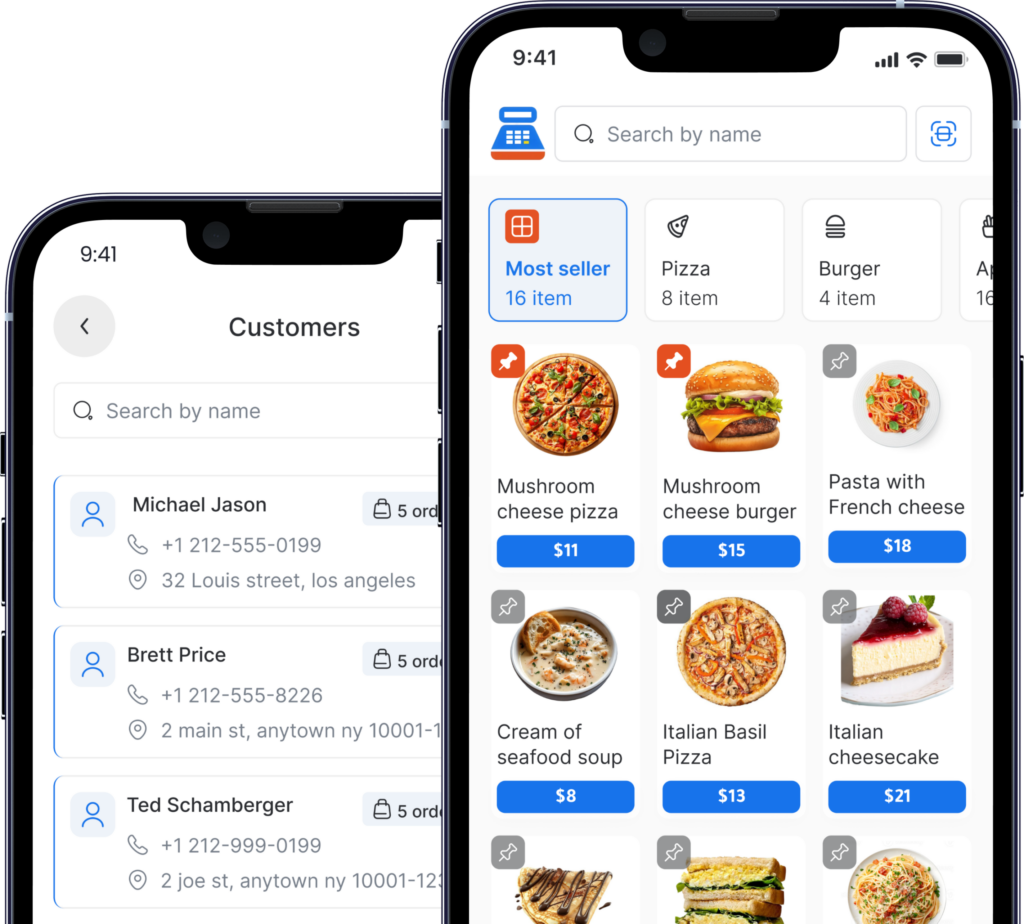
A reliable system like Cashier POS combines online and offline POS capabilities, ensuring uninterrupted service and data integrity.
Key Features to Look for in the Best Free Restaurant POS
Selecting the best free restaurant POS requires evaluating critical features that directly impact operations and growth.
1. User-Friendly Interface
Your staff should learn the system quickly. A complicated interface increases training time and order errors. Look for an intuitive POS App that simplifies navigation.
2. Fast Order Management
Efficient order processing reduces waiting times and improves customer satisfaction. The system should support:
- Dine-in orders
- Takeaway
- Delivery
- Split bills
- Modifiers and special instructions
3. Inventory Control
Food waste directly impacts profit margins. A good restaurant POS should:
- Track ingredient usage
- Send low-stock alerts
- Generate inventory reports
- Support supplier management
4. Table and Floor Management
For full-service restaurants, visual table management improves seating efficiency and reduces confusion.
5. Reporting and Analytics
Data-driven decisions are critical for growth. The best systems provide:
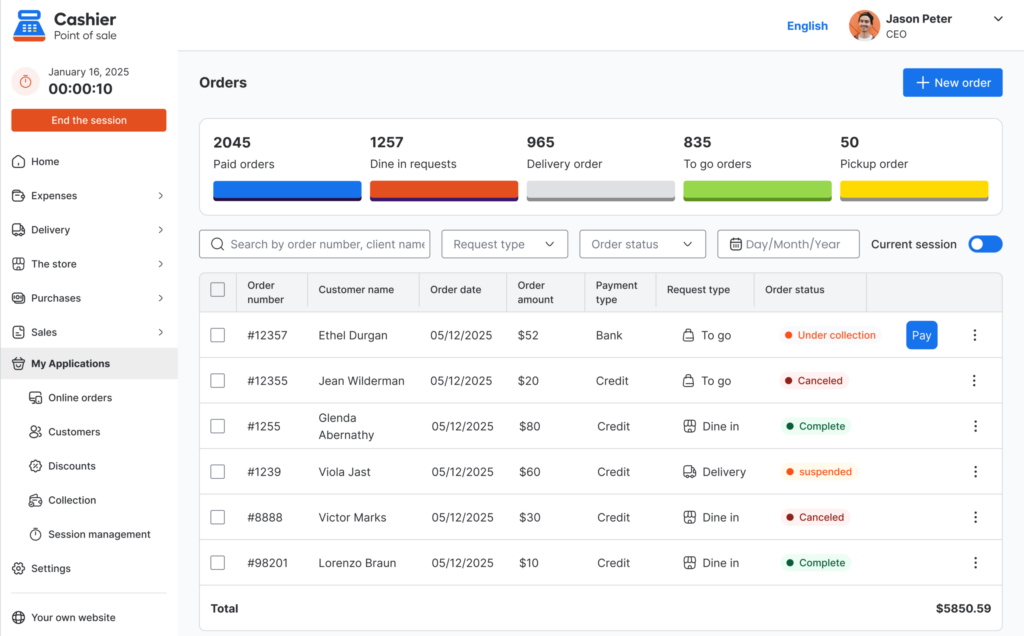
- Daily sales reports
- Best-selling item analysis
- Revenue trends
- Staff performance metrics
6. Multi-Device Compatibility
A modern POS system should work on:
- iOS devices
- Android devices
- Desktop systems
- Web browsers
This flexibility allows restaurant owners to manage operations from anywhere.
7. Scalability
As your restaurant grows, your POS system should grow with it. Ensure the system supports:
- Multiple branches
- Centralized reporting
- Role-based access control
Benefits of Choosing a Free Restaurant POS System
Reduced Initial Investment
Startups and small restaurants often operate with limited budgets and must carefully allocate every dollar toward inventory, staffing, rent, and marketing. A Free Point of Sale solution eliminates high upfront licensing fees and reduces the need for expensive proprietary hardware. Instead of committing to long-term contracts or costly subscriptions, restaurant owners can deploy a flexible Free POS System that delivers essential functionality without financial strain. This approach allows new businesses to preserve cash flow, reinvest savings into growth initiatives, and maintain financial stability during the critical early stages of operation.
Faster Implementation
Cloud-based systems typically require minimal hardware and technical setup. A simple Free POS System download and installation process allows you to start quickly, often within the same day. Most modern POS App solutions are designed with guided onboarding, intuitive dashboards, and easy menu configuration tools, reducing the need for specialized IT support. Faster implementation means your restaurant can transition from manual processes or outdated cash registers to a fully digital system with minimal downtime, ensuring operational continuity and a smooth launch.
Lower Operational Risk
Trying a free restaurant POS reduces financial and operational risk. Without heavy upfront investment, you can test features, evaluate performance, and determine whether the system aligns with your workflow before upgrading to advanced features. This flexibility is especially important for growing restaurants that may still be refining their service model. A Free Restaurant POS allows you to experiment with reporting tools, inventory controls, and multi-device management while maintaining the option to scale as your needs evolve.
Improved Efficiency
Automated processes reduce manual errors and significantly speed up daily operations. From automated tax calculations and digital receipts to real-time inventory deductions and synchronized reporting, a modern Free Point of Sale system minimizes repetitive administrative tasks. Staff can focus more on delivering exceptional customer service rather than handling paperwork or correcting billing mistakes. Over time, these efficiency gains translate into faster table turnover, improved order accuracy, better stock control, and higher overall profitability.
How a POS System Supports Restaurant Growth
A powerful restaurant POS system is not just an operational tool; it is a growth engine that drives profitability, operational clarity, and long-term scalability. Instead of reacting to daily challenges, restaurant owners gain proactive control over performance, costs, and customer experience.
1. Data-Driven Decision Making
Sales reports help you identify high-margin items and remove underperforming dishes, but the benefits go far beyond basic analysis. A modern Free POS System provides detailed breakdowns of sales by category, time period, location, and staff member. This allows restaurant owners to identify peak hours, seasonal trends, and purchasing patterns.
With accurate data, you can refine menu pricing, introduce limited-time promotions, optimize staffing schedules, and design marketing campaigns based on real customer behavior. Over time, consistent data-driven decisions lead to stronger margins, better forecasting, and more predictable revenue growth.
2. Cost Control
Inventory tracking reduces waste and prevents over-ordering, but it also strengthens supplier negotiations and purchasing strategies. A reliable restaurant POS system automatically deducts ingredients as items are sold, giving you real-time visibility into stock levels.
This transparency minimizes spoilage, highlights discrepancies, and reduces the risk of theft or mismanagement. By understanding exact food costs and portion usage, restaurant owners can maintain ideal inventory turnover rates and protect profit margins. Effective cost control is one of the most powerful ways a Free Restaurant POS supports sustainable business growth.
3. Customer Retention
Integrated customer management tools allow you to track preferences and implement loyalty programs that increase repeat visits. A smart POS App can store customer purchase history, preferred payment methods, and dining habits.
With this information, restaurants can create targeted promotions, personalized offers, and reward systems that encourage long-term engagement. Retaining existing customers is significantly more cost-effective than acquiring new ones. By leveraging customer insights from your Free Point of Sale system, you build stronger relationships and increase lifetime customer value.
4. Expansion Readiness
Multi-location support enables seamless expansion without operational chaos. As your restaurant grows, managing multiple branches manually becomes increasingly complex. A scalable POS solution centralizes reporting, standardizes pricing, synchronizes menus, and provides unified financial oversight across all locations.
This structure ensures consistency in service quality, pricing strategy, and brand identity. Whether you are opening a second location or expanding into a regional chain, the right online POS and offline POS combination ensures each branch operates efficiently while remaining connected to headquarters.
Cashier POS, for example, is designed to support restaurants of all sizes, from single-location cafés to multi-branch enterprises. Its scalable architecture, real-time reporting, and cross-device compatibility make it an ideal Free POS System for businesses planning long-term expansion.
Common Mistakes to Avoid When Choosing a Restaurant POS
Ignoring Offline Functionality
An internet outage should never stop your business. Restaurants operate in real time, and even a short disruption can lead to delayed orders, frustrated customers, and lost revenue. If your POS system depends entirely on a stable internet connection, you risk operational paralysis during network failures. A reliable offline POS ensures that orders, payments, and receipts continue to function normally, with data automatically synchronized once connectivity is restored. Business continuity is not optional in the food service industry, it is essential.
Choosing Based Only on Price
Free does not always mean limited, but ensure the system provides essential features. While a Free POS System can significantly reduce startup costs, selecting a solution based solely on price can lead to long-term inefficiencies. Evaluate functionality, reliability, customer support, scalability, and security standards before making a decision. A system that lacks inventory tracking, reporting tools, or integration capabilities may cost you more in operational inefficiencies than a properly equipped Free Restaurant POS ever would.
Overlooking Integration Capabilities
Your POS should integrate with:
- Payment gateways
- Accounting software
- Delivery platforms
Modern restaurants rely on interconnected systems to operate efficiently. Without proper integration, staff may be forced to manually transfer data between systems, increasing the risk of errors and wasting valuable time. Seamless integration ensures that sales data flows directly into accounting tools, online orders sync automatically with the kitchen, and payment processing remains smooth and secure. A well-integrated online POS reduces administrative workload and improves financial accuracy.
Failing to Plan for Growth
Choose a solution that scales with your long-term business goals. Many restaurants begin with a single location but eventually expand to multiple branches, introduce new revenue streams, or diversify their menu offerings. If your POS system cannot support multi-location management, centralized reporting, or increased transaction volumes, you may face costly migrations in the future. Selecting a scalable Free Point of Sale from the start ensures smoother expansion, consistent data management, and sustained operational efficiency as your restaurant evolves.
Why Cashier POS Is a Strong Choice for Restaurants
Cashier POS is a Free POS System built to support restaurants, supermarkets, and retail businesses. It combines flexibility, performance, and reliability.
Key advantages include:
- Online and offline POS functionality
- Multi-device support
- Real-time reporting
- Easy menu customization
- Scalable multi-branch management
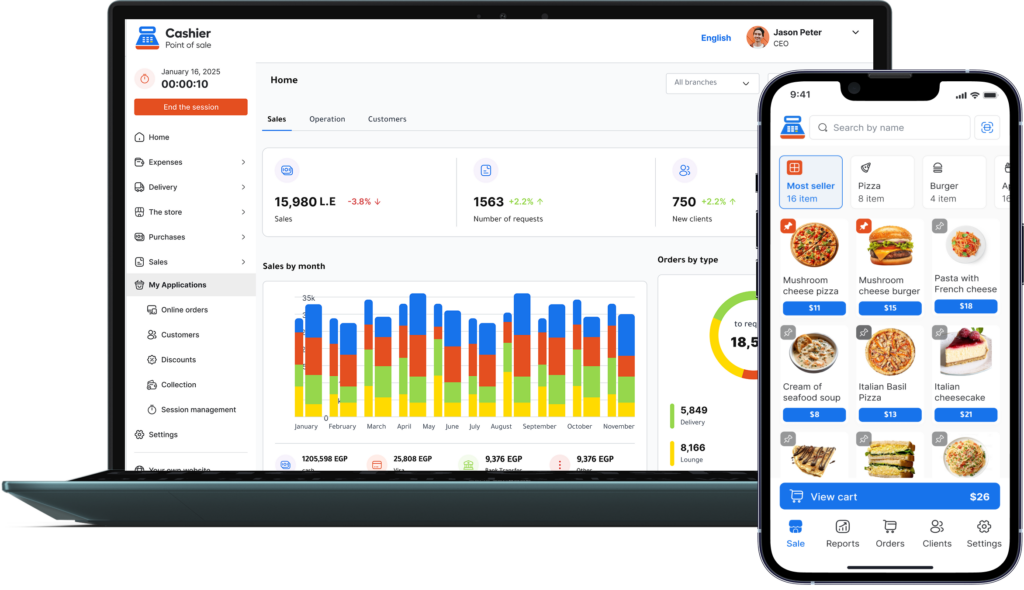
Because it works across mobile, desktop, and web platforms, Cashier POS allows restaurant owners to manage operations from virtually anywhere.
Its ability to function offline ensures uninterrupted service during internet disruptions, making it a dependable solution for busy food service environments.

Implementation Checklist for Restaurant Owners
Before installing a Free Restaurant POS, follow this detailed checklist to ensure a smooth and successful deployment:
Define your operational needs.
Identify your restaurant type, service model, menu complexity, expected transaction volume, and reporting requirements. Clarifying these factors helps you configure the Free POS System correctly from the start.Identify required integrations.
Determine which third-party tools you rely on, such as accounting software, payment processors, loyalty platforms, or online delivery services. Confirm that your restaurant POS supports seamless integration to avoid manual data entry and operational inefficiencies.Prepare and digitize your menu.
Organize categories, pricing, modifiers, and combo offers before importing them into the POS App. A well-structured digital menu improves order speed and reduces configuration errors.Set up inventory and suppliers.
Input ingredients, stock quantities, and supplier details to activate accurate inventory tracking. Proper setup ensures that your Free Restaurant POS can automatically deduct stock and generate meaningful inventory reports.Configure user roles and permissions.
Assign role-based access control for cashiers, managers, and administrators. This protects sensitive financial data while maintaining operational transparency.Train staff before launch.
Conduct hands-on training sessions so employees understand order entry, payment processing, refunds, and report generation. Proper training minimizes mistakes and ensures confidence during peak hours.Test offline functionality.
Simulate an internet outage to confirm that your offline POS mode functions correctly. Verify that transactions continue smoothly and that data synchronizes once connectivity returns.Review reporting tools and analytics dashboards.
Explore available sales summaries, product performance reports, and revenue analytics. Understanding your reporting tools early allows you to make data-driven decisions from day one.Monitor performance during the first month.
Track order accuracy, inventory consistency, staff feedback, and system stability. Use insights from your Free Point of Sale system to refine workflows and optimize daily operations.
Proper implementation maximizes efficiency, reduces operational disruption, and ensures a strong return on investment. A carefully executed rollout sets the foundation for long-term growth and consistent performance.
The Future of Restaurant POS Systems
Technology continues to reshape the restaurant industry at an unprecedented pace. Digital transformation is redefining how restaurants manage operations, interact with customers, and compete in crowded markets. Modern Free POS System platforms are no longer limited to processing transactions; they are evolving into intelligent, data-driven ecosystems that connect every aspect of restaurant management.
Emerging trends include:
- AI-powered forecasting tools to analyze historical sales data, weather patterns, local events, and seasonal demand fluctuations to generate accurate projections. This enables smarter purchasing decisions, optimized staffing schedules, and reduced food waste. Contactless payment solutions improve speed, security, and customer convenience while minimizing physical contact and checkout delays.
- Self-service kiosks that are transforming quick-service environments by reducing queue times, improving order accuracy, and increasing average order value through automated upselling prompts. Integrated online ordering ensures that in-house and delivery sales flow into a single centralized system, keeping inventory synchronized and kitchen operations streamlined.
- Advanced customer analytics to empower restaurant owners to segment audiences, track loyalty behavior, and personalize marketing campaigns with precision. Instead of relying on guesswork, restaurants can use actionable insights from their POS App to create targeted promotions that drive measurable results.
- Cloud-based online POS infrastructure that allows centralized control across multiple locations, while robust offline POS functionality guarantees uninterrupted operations during connectivity disruptions. Restaurants that embrace these innovations position themselves for long-term resilience, operational excellence, and sustained profitability.
Choosing a modern POS App ensures your restaurant remains competitive as industry standards evolve. Investing in a scalable Free Restaurant POS today prepares your business for tomorrow’s technological advancements and shifting customer expectations.
Organize your sales in seconds with Cashier POS!
Take control of sales and users in moments, and give your business a fully integrated system that runs smoothly.
Get Started For FreeFrequently Asked Questions (FAQ)
The best free restaurant POS system is one that offers order management, inventory tracking, reporting, and both online and offline functionality. Cashier POS stands out as the best choice because it combines scalability, reliability, ease of use, and cross-device compatibility in a powerful free POS system designed specifically to support restaurant growth.
Yes. Many modern Free POS System solutions are built to support high transaction volumes, peak-hour activity, and multi-location operations without sacrificing speed or performance.
Absolutely. Offline POS ensures uninterrupted operations during internet outages, protecting revenue, maintaining order flow, and preserving customer experience even during connectivity disruptions.
By reducing billing errors, controlling inventory, analyzing real-time sales data, optimizing staff performance, and identifying high-margin menu items, a restaurant POS system directly improves efficiency and increases overall profit margins.
Conclusion
Selecting the best free restaurant management POS system is a strategic decision that directly impacts efficiency, profitability, and long-term growth. A reliable Free Point of Sale solution should offer intuitive design, strong reporting tools, inventory control, and both online and offline POS capabilities.
Restaurants that invest in a scalable, data-driven POS system position themselves for sustainable success in a competitive market.
Cashier POS stands out as a powerful and flexible solution that supports restaurants of all sizes. By combining accessibility, reliability, and growth-oriented features, it provides restaurant owners with the tools needed to streamline operations and build a thriving business.
When choosing your next restaurant POS system, prioritize functionality, scalability, and business continuity. The right decision today can drive measurable growth for years to come.