

The restaurant industry has undergone a dramatic transformation over the past several years, and online food ordering has emerged as one of the most powerful revenue drivers available to modern restaurateurs. Whether you run a single neighborhood bistro or a multi-location fast-casual chain, the ability to capture and convert digital customers is no longer a competitive advantage, it is a baseline expectation. Consumers today demand convenience, speed, and seamless digital experiences, and restaurants that fail to meet those expectations are quietly losing orders to competitors who do.
Yet simply having an online ordering option is not enough. Many restaurant owners invest in digital channels only to find that order volume remains disappointingly low, customer retention is weak, and the technology they are using creates more friction than it removes. The difference between a restaurant that thrives online and one that struggles often comes down to strategy, specifically, how well the business optimizes every touchpoint in the digital ordering journey, from the moment a hungry customer opens their phone to the instant their food arrives at the door.
This guide explores the most effective, actionable strategies restaurant owners and operators can use to increase online food orders, improve customer loyalty, and build a sustainable digital revenue stream. Along the way, you will see how the right point-of-sale infrastructure, such as the tools offered by Cashier POS, forms the critical foundation upon which all of these strategies rest.
Organize your sales in seconds with Cashier POS!
Take control of sales and users in moments, and give your business a fully integrated system that runs smoothly.
Get Started For FreeWhy Online Food Ordering Is Now Essential for Restaurant Growth
Before diving into tactics, it is worth understanding the scale of the opportunity. Online food delivery and ordering is projected to surpass $1.4 trillion globally by 2027, according to industry analysts. In the United States alone, a significant majority of consumers report placing at least one online food order per week. The pandemic accelerated this shift dramatically, but what began as a necessity has since become a deeply embedded consumer habit that shows no signs of reversing.
For restaurant owners, this means that online ordering is not a trend to watch, it is a channel to master. Restaurants that optimize their digital presence, invest in the right technology, and actively cultivate their online customer base consistently outperform those that rely solely on walk-in traffic or phone orders. The question is not whether to prioritize online ordering, but how to do it most effectively.
Optimize Your Restaurant’s Online Ordering Experience
Make Your Menu Work Harder for You
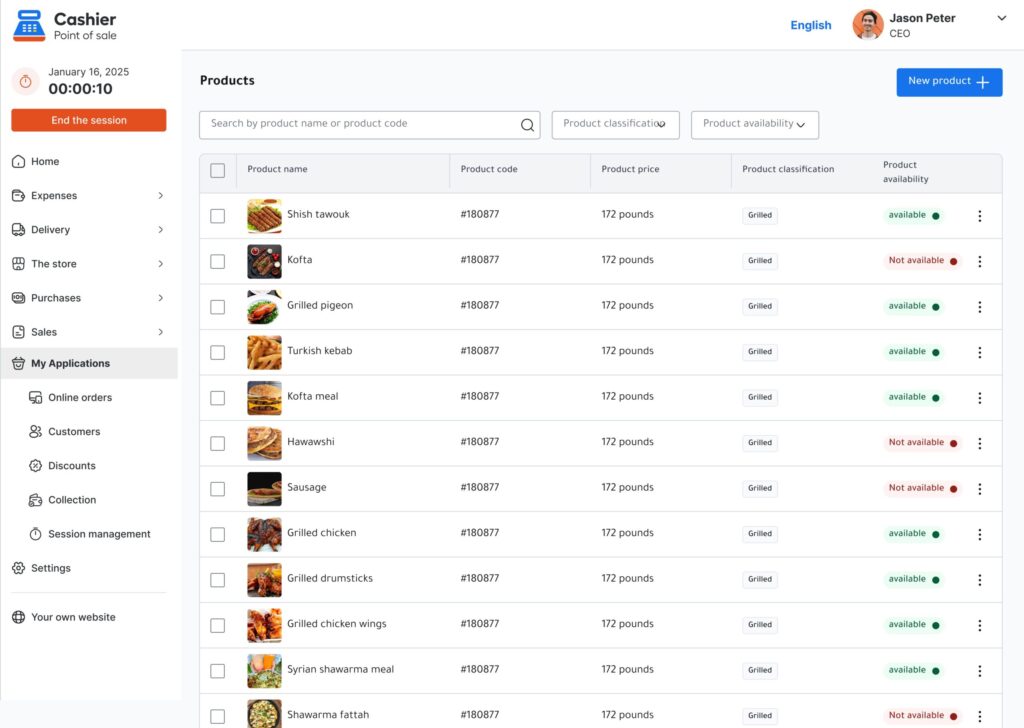
Your digital menu is your most powerful sales tool, and yet most restaurant operators treat it as an afterthought. An optimized online menu is not simply a list of dishes with prices, it is a carefully crafted conversion engine designed to guide customers toward higher-value purchases while making the ordering experience feel effortless and enjoyable.
Start with high-quality photography. Research consistently shows that menu items accompanied by professional food photography generate significantly more clicks and orders than those without images. Every dish you want to promote should have a compelling, well-lit photograph that makes the food look as appetizing as possible. Beyond photography, your menu descriptions should do real work. Rather than writing “Grilled Chicken Sandwich,” write “Herb-marinated grilled chicken breast served on a toasted brioche bun with house-made garlic aioli and crisp arugula.” The difference in perceived value, and in conversion rate, is substantial.
Organize your menu with intent. Use categories that reflect how customers think about ordering: start with your bestsellers and highest-margin items, use strategic placement to guide the eye toward profitable choices, and simplify the overall structure so that customers are never overwhelmed by too many options. A clean, well-organized digital menu reduces friction and increases the likelihood that a browser becomes a buyer.
Streamline the Checkout Process
Every additional step in the checkout process is an opportunity for a customer to abandon their order. Restaurant operators must treat digital checkout with the same rigor that e-commerce businesses bring to their shopping cart optimization. This means minimizing the number of screens a customer must navigate, offering multiple payment options including credit cards, digital wallets, and buy-now-pay-later services, and ensuring that the entire process functions flawlessly on mobile devices.
Guest checkout options are particularly important. Requiring customers to create an account before placing their first order introduces significant friction and drives abandonment. Allow first-time customers to order as guests, then offer them an incentive, such as a discount on their next order, to create an account afterward. This approach captures the immediate sale while building the foundation for a long-term customer relationship.
Leverage Technology to Drive More Online Orders
Invest in a Powerful POS System with Online Ordering Integration
The technology infrastructure underpinning your online ordering operation has a direct and measurable impact on order volume, operational efficiency, and customer satisfaction. A fragmented technology stack, where your online orders, in-store sales, kitchen operations, and customer data all live in separate systems, creates chaos, errors, and missed opportunities.
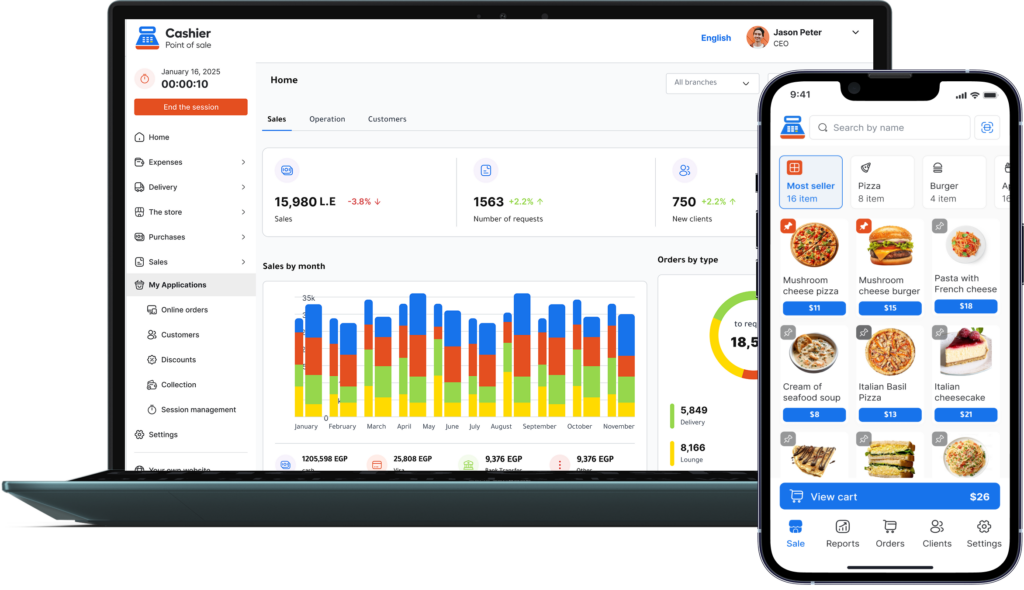
A modern, integrated point-of-sale system resolves these challenges by connecting every aspect of your restaurant operation through a single, unified platform. Cashier POS, for example, offers restaurant operators a comprehensive solution that seamlessly integrates online ordering with in-store operations, ensuring that every order, regardless of its origin, flows directly into the kitchen without manual re-entry, reducing errors and dramatically accelerating fulfillment times. When your technology works in harmony, your staff can focus on food quality and customer experience rather than managing the complexity of disconnected systems.
The integration between your POS and your online ordering platform also enables powerful capabilities that are simply not possible with fragmented tools: real-time menu synchronization so that sold-out items are automatically removed from your digital menu, accurate wait time estimates communicated directly to customers, and consolidated reporting that gives you a clear view of your total business performance across all channels.
Use Data and Analytics to Make Smarter Decisions
One of the most significant advantages of digital ordering over traditional phone or walk-in orders is the richness of the data it generates. Every online transaction creates a detailed record of what was ordered, when it was ordered, how much was spent, and who placed the order. Restaurant operators who learn to harness this data gain a profound competitive advantage.
Analyze your order data regularly to identify your highest-performing items and your slowest movers. Use this intelligence to refine your menu, adjusting prices, descriptions, and placement based on real evidence rather than intuition. Identify your peak ordering windows and ensure your staffing and kitchen capacity are aligned with demand. Track customer lifetime value and identify which acquisition channels are delivering your most loyal, highest-spending customers.
Modern POS platforms like Cashier POS provide restaurant owners with robust analytics dashboards that make this kind of data analysis accessible even to operators without a background in data science. When you can see your business clearly, you can grow it strategically.
Implement a Loyalty and Rewards Program
Customer retention is one of the most cost-effective growth levers available to restaurant operators. Acquiring a new customer costs significantly more than retaining an existing one, and loyal customers consistently spend more per order and visit more frequently than occasional buyers. A well-designed digital loyalty program transforms one-time online orderers into habitual customers who actively prefer your restaurant over competitors.
The most effective restaurant loyalty programs offer immediate, tangible value: points earned on every order, redeemable for free items or discounts; tiered rewards that increase in value as customers spend more; birthday bonuses and surprise rewards that create emotional connection; and exclusive access to new menu items or promotions for members. Critically, your loyalty program must be integrated with your online ordering platform so that earning and redeeming rewards is seamless and effortless. Friction in the redemption process is one of the most common reasons loyalty programs fail to drive repeat business.
Marketing Strategies to Increase Online Order Volume
Master Local SEO for Restaurants
When a hungry customer searches “pizza delivery near me” or “best Thai food in [your city],” your restaurant needs to appear prominently in those results. Local search engine optimization is the discipline of ensuring that your business ranks highly for the location-based searches your potential customers are conducting every day, and it is one of the highest-return marketing investments available to restaurant operators.
Begin by claiming and fully optimizing your Google Business Profile. Ensure that your business name, address, phone number, hours, and website are accurate and consistent. Upload high-quality photos of your food, interior, and team. Respond to every review, both positive and negative, in a timely and professional manner. Add your menu directly to your Google Business Profile, including pricing and descriptions, so that customers can browse and be enticed before they even visit your website.
Beyond Google, build citations across other relevant directories including Yelp, TripAdvisor, Bing Places, and any local business directories specific to your city or region. Consistency in your business information across all of these platforms signals to search engines that your business is legitimate and well-established, which directly improves your local search rankings.
Run Targeted Digital Advertising Campaigns
Paid digital advertising, particularly on Google and Meta platforms, offers restaurant operators a powerful way to reach hungry customers at precisely the moment they are deciding where to order from. Google search ads allow you to appear at the top of results pages when customers search for terms directly related to your cuisine type, location, or specific dishes. Meta advertising (Facebook and Instagram) enables highly targeted campaigns based on demographics, interests, location, and behavioral data.
The key to making digital advertising profitable for restaurants is precision targeting and compelling creative. Narrow your geographic targeting to the delivery radius you actually serve. Use time-of-day targeting to show your ads most aggressively during peak meal consideration windows, late morning for lunch, late afternoon for dinner. Create ads that feature your most visually appealing dishes and include a clear, specific call to action such as “Order Now” with a direct link to your online ordering platform.
Retargeting campaigns, which display ads specifically to people who have previously visited your website or ordering page but did not complete a purchase, are particularly effective for restaurants and typically deliver a strong return on advertising spend.
Build an Engaged Social Media Presence
Social media, used strategically, is one of the most cost-effective marketing channels available to restaurant operators. Platforms like Instagram, TikTok, and Facebook allow you to reach both existing customers and new audiences with compelling content that builds appetite, loyalty, and brand recognition over time.
The content that performs best for restaurants combines three essential elements: authenticity, visual appeal, and a clear path to action. Behind-the-scenes videos of your kitchen team preparing dishes, short-form reels showcasing your most photogenic menu items, customer testimonials and user-generated content, and time-limited promotional offers all tend to generate strong engagement. Every piece of content you publish should include a clear, easy mechanism for interested viewers to place an order, whether that is a link in your bio, a swipe-up story link, or a “Order Now” button integrated directly into your business profile.
Consistency matters more than perfection in social media marketing. Committing to a realistic, sustainable posting schedule and maintaining it over time will outperform sporadic bursts of high-effort content every time.
Operational Strategies That Support Higher Online Order Volume
Optimize Your Delivery and Pickup Operations
Even the most effective marketing strategy will fail to generate repeat business if the execution of orders is poor. Delivery time accuracy, packaging quality, food temperature, and order correctness are the operational pillars upon which a strong online ordering reputation is built. Customers who receive a late, cold, or incorrect order rarely give second chances, and in the age of public reviews, a pattern of operational failures can devastate your online reputation and undermine all of your marketing investments.
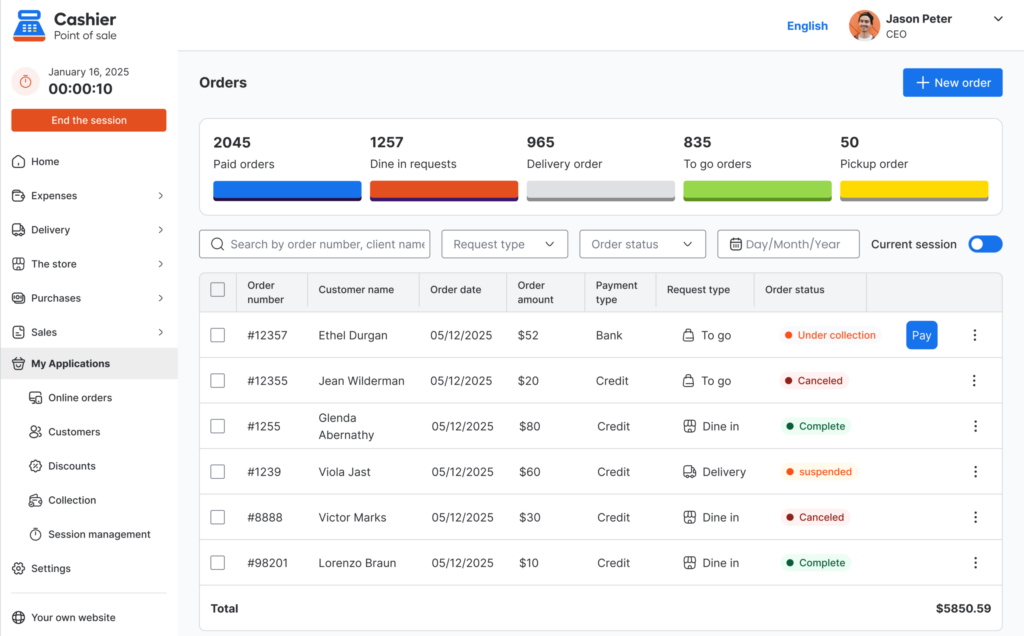
Invest in packaging that maintains food quality during transit, with separate containers for hot and cold items and packaging designed to prevent spills and sogginess. Establish clear standard operating procedures for order checking before dispatch. Use your POS system’s kitchen display capabilities to ensure that every online order is visible to your kitchen team in real time, with accurate timing information, so that food is prepared and ready at precisely the right moment.
Manage Third-Party Delivery Platforms Strategically
Third-party delivery platforms such as DoorDash, Uber Eats, and Grubhub can be powerful tools for reaching new customers who might not otherwise discover your restaurant. However, the commission structures these platforms charge, typically ranging from 15% to 30% of order value, make them costly channels for sustaining long-term profitability if relied upon exclusively.
The most effective approach treats third-party platforms as customer acquisition tools rather than permanent revenue channels. Use them to attract new customers, then actively work to migrate those customers to your own direct ordering channel by offering a small incentive for their first direct order. Over time, building your direct online ordering volume, through your own website or a platform that charges lower fees, significantly improves your overall margin profile while giving you full control over the customer relationship and data.
Organize your sales in seconds with Cashier POS!
Take control of sales and users in moments, and give your business a fully integrated system that runs smoothly.
Get Started For FreeFrequently Asked Questions (FAQ)
The fastest results typically come from combining menu optimization with a targeted promotional offer, such as free delivery on first orders or a discount for new customers, promoted through your existing social media channels and email list. These tactics can generate measurable increases in order volume within days without requiring significant marketing spend.
Extremely important. The majority of online food orders are now placed on mobile devices, and a digital ordering experience that is not fully optimized for mobile will suffer significantly higher abandonment rates. Every element of your ordering platform, from menu browsing to checkout to order confirmation, must function flawlessly on smartphones of all sizes.
Ideally, you should use both in a complementary strategy. Third-party platforms provide visibility and access to their existing user base, making them effective for customer acquisition. However, a direct online ordering channel, integrated with your POS system, gives you higher margins, full customer data ownership, and the ability to build direct relationships with your best customers. The long-term goal should be maximizing your direct channel volume.
A modern POS system like Cashier POS integrates your online ordering, in-store operations, customer data, and analytics into a single platform, enabling faster and more accurate order fulfillment, real-time menu management, loyalty program integration, and the data insights needed to make informed marketing and operational decisions. All of these capabilities directly contribute to higher order volume and better customer retention.
Your online menu should be updated immediately whenever items are unavailable, and reviewed comprehensively at least once per quarter. Seasonal updates, limited-time offers, and the removal of consistently underperforming items keep your menu fresh and strategically optimized. Ensuring that your online menu always matches your actual available offerings is critical for customer satisfaction and operational efficiency.
Conclusion
Growing your restaurant’s online food order volume is not a matter of luck or a single breakthrough tactic, it is the result of executing consistently across multiple interconnected dimensions: a compelling and well-optimized digital menu, a seamless ordering and checkout experience, a powerful integrated technology stack, smart data-driven decision-making, and marketing strategies that reach hungry customers at the right moment with the right message.
The restaurants that are winning online today are those that treat digital ordering as a core business discipline, not an afterthought. They invest in the right infrastructure, analyze their data rigorously, build genuine relationships with their customers through loyalty programs and great experiences, and continuously refine every aspect of their digital operation based on evidence and results.
Technology is the foundation that makes all of this possible at scale. Platforms like Cashier POS are built precisely to give restaurant operators the integrated capabilities they need, from seamless online order management and real-time kitchen synchronization to customer analytics and loyalty program tools, to compete and thrive in an increasingly digital marketplace. When your technology infrastructure is working as a true partner in your growth, you are free to focus on what you do best: creating exceptional food and experiences that keep customers coming back, order after order.
The opportunity in online food ordering has never been larger, and the tools to capture it have never been more accessible. The restaurants that act decisively and strategically today will be the ones leading their markets tomorrow.