

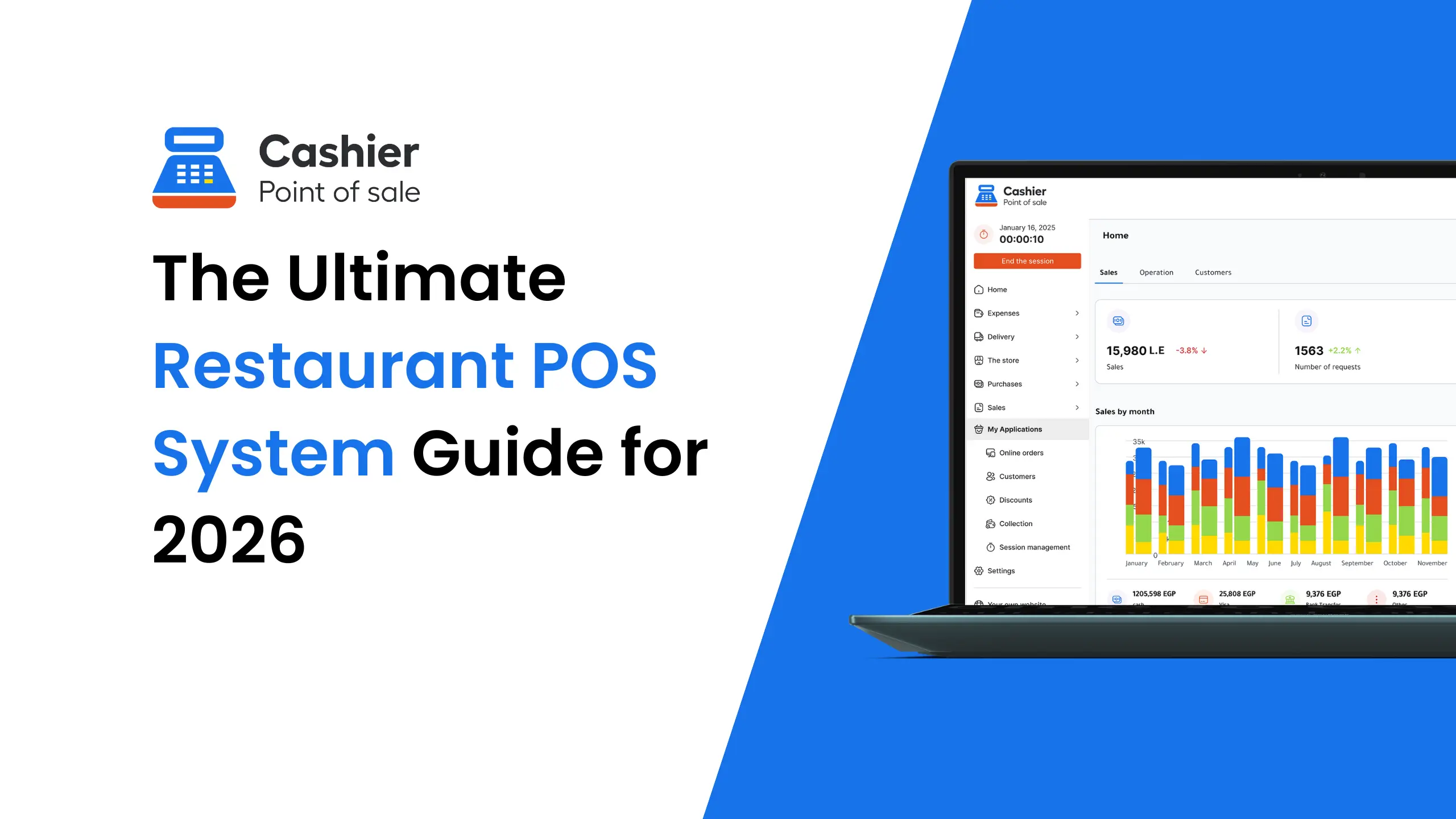
The restaurant industry is evolving faster than ever. Rising customer expectations, digital transformation, government regulations, and intense competition are pushing restaurant owners to rethink how they manage operations. At the heart of this transformation lies the Restaurant POS system.
In 2026, a POS system is no longer just a digital cash register. It is a comprehensive business management platform that connects sales, inventory, staff, accounting, customer experience, and electronic invoicing compliance into one integrated solution.
This practical guide explains how restaurant POS systems work, how they help increase sales, and how they support compliance with e‑invoicing regulations. It also highlights best practices and key features to look for when choosing the right POS system for your restaurant, with real-world insights tailored for modern food businesses.
Organize your sales in seconds with Cashier POS!
Take control of sales and users in moments, and give your business a fully integrated system that runs smoothly.
Get Started For FreeWhat Is a Restaurant POS System?
A restaurant POS system is a combination of software and hardware that allows restaurants to process orders, accept payments, manage menus, track inventory, and generate reports.
Unlike traditional cash registers, modern POS systems operate in the cloud, work across multiple devices, and integrate with third‑party services such as payment gateways, accounting tools, and government tax platforms.
Core Components of a Restaurant POS
- Sales and order management
- Payment processing (cash, cards, digital wallets)
- Menu and pricing control
- Inventory and ingredient tracking
- Staff and shift management
- Reporting and analytics
- Electronic invoicing and tax compliance
Why Restaurant POS Systems Matter More in 2026
The year 2026 represents a turning point for the food and beverage sector. Governments around the world are accelerating digital taxation and e-invoicing initiatives, customers expect faster and more personalized service, and restaurant margins are under constant pressure due to rising food, labor, and operational costs.
At the same time, competition within the restaurant industry has intensified. Independent restaurants, cloud kitchens, and large chains are all leveraging technology to optimize workflows and gain a competitive edge. In this environment, relying on manual processes or outdated cash registers is no longer sustainable.
A modern POS system helps restaurants adapt to these challenges by acting as a centralized operational hub. It connects front-of-house and back-of-house activities, transforms raw sales data into actionable insights, and ensures compliance with evolving legal requirements.
A modern POS system helps restaurants adapt by offering:
- Real-time business visibility across sales, inventory, and staff performance
- Automation of repetitive tasks such as billing, reporting, and stock updates
- Data-driven decision making based on accurate, real-time analytics
- Built-in compliance with evolving tax and e-invoicing regulations
- Improved customer experience through faster service and fewer errors
Restaurants that fail to adopt advanced POS solutions risk falling behind competitors who operate faster, smarter, and more efficiently. In contrast, businesses that invest early in a future-ready restaurant POS system are better positioned to scale, remain compliant, and sustain profitability in an increasingly digital food and beverage landscape.
How a POS System Helps Increase Restaurant Sales
Increasing sales is not just about attracting more customers, it is about optimizing every transaction. A well‑implemented POS system directly contributes to revenue growth in several ways.
Faster Order Processing
Speed matters in restaurants. A POS system reduces order errors, speeds up checkout, and shortens wait times. Faster service leads to higher table turnover and increased daily revenue.
Smart Upselling and Cross‑Selling
Modern POS systems prompt staff with upsell suggestions such as add‑ons, combos, or premium options. These small enhancements significantly increase average order value over time.
Accurate Menu Engineering
POS analytics show which items sell best and which underperform. Restaurants can optimize menus, adjust pricing, and promote high‑margin items using real sales data.
Multi‑Channel Sales Integration
In 2026, restaurants sell through dine‑in, takeaway, delivery apps, and online ordering. A unified POS system consolidates all sales channels into one dashboard, preventing missed revenue and inventory mismatches.
Inventory Control and Cost Reduction
Food waste and poor inventory management are silent profit killers for restaurants of all sizes. Even small inefficiencies in stock handling, portion control, or purchasing decisions can accumulate into significant financial losses over time. A modern restaurant POS system addresses this challenge by tracking stock usage in real time and directly linking ingredients to menu items, creating full visibility over how inventory moves through the business.
By connecting sales data with inventory consumption, a POS system allows restaurant owners and managers to understand exactly which dishes consume the most resources, which ingredients move slowly, and where waste is occurring. This level of insight is nearly impossible to achieve with manual tracking or spreadsheets.
Benefits of POS‑Based Inventory Management
- Automatic stock deduction after each sale, ensuring inventory levels are always accurate
- Low‑stock alerts that help avoid shortages and last‑minute emergency purchases
- Reduced food waste and over‑ordering through data‑driven purchasing decisions
- Better supplier planning based on historical usage and demand patterns
- Improved cost control by identifying high‑waste or low‑margin items
In addition, POS‑based inventory management supports menu optimization and seasonal planning. Restaurants can confidently introduce new items, adjust portion sizes, or renegotiate supplier contracts based on reliable data rather than assumptions.
By controlling food and inventory costs more effectively, restaurants improve overall profitability without raising prices, protecting margins while maintaining customer satisfaction.
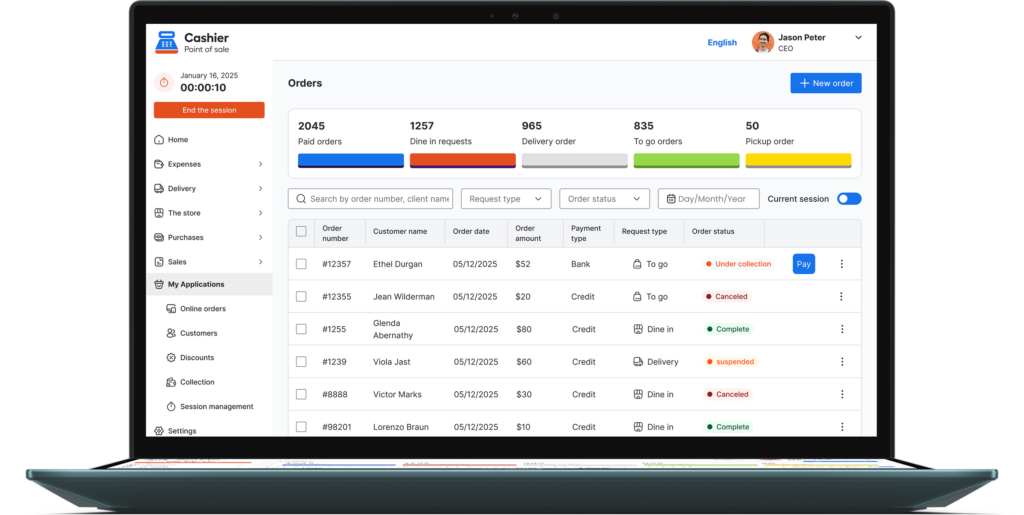
Inventory Control and Cost Reduction
Labor costs represent a significant portion of restaurant expenses and are often one of the most difficult areas to control. Wages, overtime, scheduling inefficiencies, and staff turnover can quickly erode profit margins if not managed carefully. Modern restaurant POS systems help optimize workforce management by providing structure, transparency, and data-driven insights into daily operations.
By centralizing staff-related activities within the POS system, restaurant owners gain real-time visibility into who is working, when they are scheduled, and how individual employees perform during their shifts. This reduces reliance on manual schedules, paper timesheets, and disconnected tools.
Key Staff Features
- Role-based access and permissions to ensure employees only access relevant functions
- Time tracking and shift scheduling that reduce overtime and prevent scheduling conflicts
- Performance reports by employee, highlighting productivity and sales contribution
- Reduced fraud and manual errors through controlled access and automated logs
In addition, POS-based staff management improves accountability and communication across teams. Managers can quickly identify understaffed shifts, balance workloads, and reward high-performing employees based on accurate data.
When staff workflows are clear, automated, and fair, service quality improves, employee satisfaction increases, and operational stress decreases for both management and frontline teams.
Electronic Invoicing Compliance: A 2026 Requirement
Electronic invoicing is no longer optional in many regions. Governments are implementing real‑time tax reporting and digital invoice validation to improve transparency and reduce tax evasion.
What Is Electronic Invoicing?
Electronic invoicing (e‑invoicing) refers to the creation, transmission, and storage of invoices in a structured digital format that complies with government standards.
Why POS Systems Are Critical for Compliance
A compliant POS system:
- Generates invoices in approved formats
- Applies correct tax calculations automatically
- Stores invoices securely for audits
- Integrates with government platforms
Without a compliant POS system, restaurants risk penalties, operational disruptions, and legal issues.
How Cashier POS Supports Restaurants
Cashier POS is designed to meet the evolving needs of restaurants in 2026 and beyond. It combines simplicity with powerful, enterprise-grade features, making it suitable for small independent eateries, fast-growing restaurant chains, food trucks, cafés, and large food operations alike. The system is built with flexibility in mind, allowing restaurants to start small and scale effortlessly as their business grows.
One of the key strengths of Cashier POS is its ability to centralize all restaurant operations into a single, easy-to-use platform. From order taking and payments to inventory tracking and compliance reporting, Cashier POS reduces operational complexity and eliminates the need for multiple disconnected tools.
Key Advantages of Cashier POS
- Free POS system with scalable features, ideal for startups and established restaurants
- Online and offline POS functionality to ensure uninterrupted sales at all times
- Fast order and payment processing that reduces queues and improves customer satisfaction
- Advanced inventory and menu management linked directly to real sales data
- Detailed sales, tax, and performance reports for informed decision-making
- Built-in support for electronic invoicing to meet current and future regulatory requirements
In addition, Cashier POS is designed to be user-friendly, minimizing training time for staff and enabling managers to access critical insights instantly. Regular updates ensure that the system remains compliant with new regulations and aligned with emerging industry trends.
By using Cashier POS, restaurants can focus on what matters most: delivering exceptional customer experiences, maintaining full compliance with e-invoicing laws, and driving sustainable revenue growth through smarter, data-driven operations.
Online and Offline POS: Business Continuity Matters
Internet outages should never stop sales. In the restaurant industry, even a short interruption can lead to lost revenue, frustrated customers, and operational chaos. That is why a reliable restaurant POS system must be designed to work seamlessly both online and offline, without compromising speed, accuracy, or compliance.
An offline-capable POS system ensures that restaurants can continue accepting orders, processing payments, and issuing receipts even during internet disruptions. This is especially critical for busy service hours, peak dining times, and locations with unstable connectivity. Instead of reverting to manual notes or stopping service altogether, staff can continue working confidently using the POS system.
Cashier POS allows restaurants to continue processing orders and payments even without internet access. All transactions are securely stored locally on the device while offline. Once the internet connection is restored, the system automatically synchronizes all sales, inventory updates, and invoice data with the cloud.
This automatic synchronization ensures data accuracy, prevents duplication or loss of transactions, and maintains full compliance with reporting and electronic invoicing requirements. By supporting both online and offline operations, Cashier POS provides true business continuity and peace of mind for restaurant owners who cannot afford downtime.
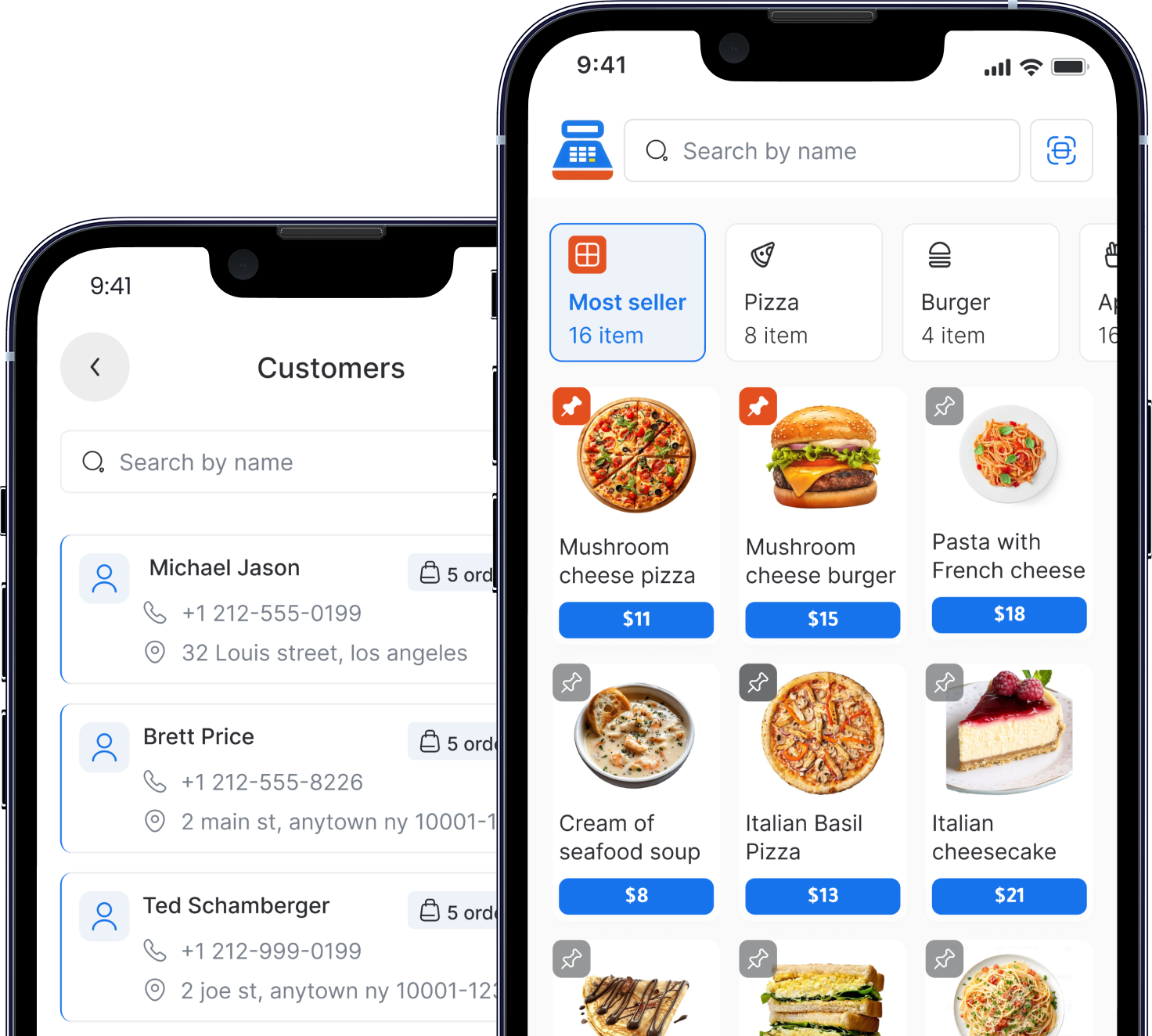
Choosing the Right Restaurant POS System
Selecting the right POS system is a strategic decision that can directly impact a restaurant’s efficiency, profitability, and long-term sustainability. Rather than focusing solely on upfront costs, restaurant owners should evaluate POS solutions based on the total value they deliver over time, including operational improvements, compliance support, and scalability.
A well-chosen restaurant POS system becomes a long-term business partner. It should adapt as the restaurant grows, support new sales channels, and evolve alongside regulatory and technological changes. Choosing the wrong system, on the other hand, can lead to frequent disruptions, costly migrations, and missed growth opportunities.
Key Criteria to Consider
- Ease of use and training: The system should be intuitive for staff and managers, reducing onboarding time and minimizing operational errors.
- Compliance with tax and e‑invoicing laws: Built-in compliance features protect restaurants from penalties and simplify audits.
- Scalability for business growth: The POS should support additional branches, users, and features without requiring a complete system replacement.
- Integration with payment and delivery platforms: Seamless integrations prevent data silos and ensure accurate reporting across all sales channels.
- Quality of support and updates: Reliable technical support and regular software updates ensure long-term stability and compliance.
In addition, restaurant owners should consider the POS provider’s roadmap, industry experience, and commitment to innovation. A future‑ready POS system is not an expense, it is an investment that pays for itself through greater efficiency, improved decision-making, reduced risk, and sustainable business growth.
Security and Data Protection
With digital systems comes responsibility. As restaurants increasingly rely on POS platforms to handle payments, customer information, employee data, and financial records, protecting sensitive customer and business data becomes a critical priority rather than a technical afterthought.
A secure restaurant POS system safeguards information such as card details, personal customer data, sales records, and tax reports against unauthorized access, fraud, and data breaches. In many regions, data protection is also regulated by law, meaning inadequate security measures can result in penalties, reputational damage, and loss of customer trust.
Modern POS platforms use multiple layers of security to minimize risk, including:
- Encrypted transactions to protect payment and sales data during transmission
- Secure user authentication such as role-based access and strong login controls
- Cloud backups to prevent data loss in case of hardware failure or incidents
- Audit logs that track system activity for transparency and accountability
In addition, cloud-based POS systems benefit from continuous security updates, monitoring, and compliance improvements that are difficult to maintain with on-premise solutions. By investing in a POS system with robust security and data protection standards, restaurants demonstrate professionalism, protect their operations, and build long-term trust with customers, partners, and regulators alike.
The Future of Restaurant POS Systems
Looking beyond 2026, restaurant POS systems will increasingly integrate artificial intelligence, predictive analytics, and advanced automation to move from reactive tools to proactive business intelligence platforms.
Instead of simply recording transactions, future POS systems will actively support decision-making by analyzing large volumes of sales, customer, and operational data in real time. This shift will allow restaurant owners to anticipate demand, optimize staffing, and personalize customer experiences with greater accuracy.
Expected trends include:
- AI‑driven demand forecasting to predict busy periods, optimize inventory purchases, and reduce food waste
- Personalized customer offers based on purchase history, preferences, and loyalty behavior
- Voice‑based ordering and hands‑free interactions to improve speed and accessibility in busy kitchens
- Deeper integration with financial systems for automated accounting, tax reporting, and cash‑flow insights
- Predictive maintenance and alerts that identify potential operational issues before they impact service
As these technologies mature, POS systems will play an even more strategic role in restaurant management. Restaurants that adopt flexible, modern POS platforms today will be best positioned to adapt quickly, remain competitive, and thrive in a data‑driven, highly automated restaurant landscape.
Frequently Asked Questions (FAQ)
What is the best POS system for restaurants in 2026?
The best POS system is one that combines sales management, inventory control, and electronic invoicing compliance. A solution like Cashier POS offers these features in one platform.
Is a POS system mandatory for restaurants?
In many regions, POS systems are required to comply with tax reporting and e‑invoicing regulations, making them essential for legal operation.
Can a POS system increase restaurant sales?
Yes. POS systems improve speed, accuracy, upselling, and decision‑making, all of which contribute to higher revenue.
What happens if the internet goes down?
A good POS system supports offline mode, allowing restaurants to continue selling without interruption.
Is electronic invoicing difficult to implement?
With a compliant POS system, electronic invoicing is automated and requires minimal manual effort.
Organize your sales in seconds with Cashier POS!
Take control of sales and users in moments, and give your business a fully integrated system that runs smoothly.
Get Started For FreeConclusion
In 2026, a restaurant POS system is no longer a luxury, it is a necessity. From increasing sales and controlling costs to ensuring compliance with electronic invoicing regulations, the right POS platform transforms how restaurants operate.
By adopting a modern, flexible solution like Cashier POS, restaurant owners gain a powerful tool that supports growth, compliance, and operational excellence. Investing in the right POS system today ensures long‑term success in an increasingly digital restaurant industry.