

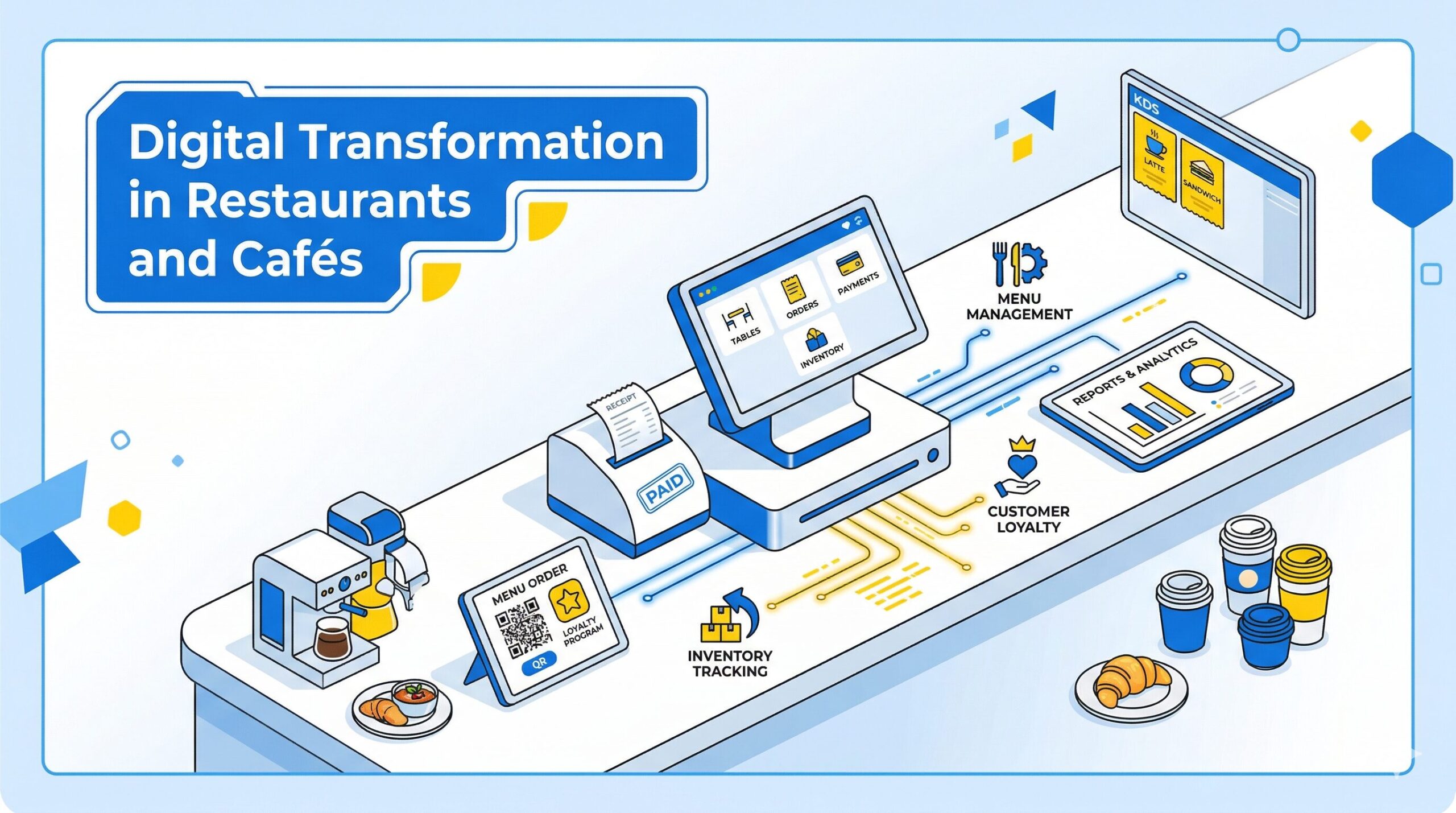
In today’s rapidly evolving digital landscape, digital transformation has become a necessity for all industries, especially the restaurant and café sector, which faces increasing competition and constantly changing customer expectations. Success is no longer defined only by food quality or service excellence; it is now strongly linked to how effectively a business adopts modern technology to improve operational efficiency, reduce costs, accelerate daily workflows, and enhance the overall customer experience.
Restaurant owners today face multiple challenges such as fast and accurate order management, inventory tracking, financial performance analysis, and delivering a seamless experience both in-store and through delivery channels. This is where digital systems come into play, transforming complex operations into simple, automated processes.
This is why solutions like a POS system and a modern cashier software have become essential tools in this transformation, offering an integrated platform to manage daily operations efficiently, from order processing to inventory management and advanced reporting.
Organize your sales in seconds with Cashier POS!
Take control of sales and users in moments, and give your business a fully integrated system that runs smoothly.
Get Started For FreeWhat is Digital Transformation in Restaurants and Cafés?
Digital transformation is the integration of technology into all areas of a business with the goal of improving performance, increasing productivity, and delivering a better customer experience. In the restaurant industry, this includes using advanced cashier software, order management systems, digital payments, and smart analytics.
It also extends to automating daily operations and reducing manual processes that often lead to human error or slow service. By implementing a modern POS system, restaurants gain real-time visibility into sales, inventory levels, and customer behavior.
When restaurants adopt a fully integrated POS solution, they shift from traditional management to data-driven decision-making. This enables owners to analyze sales trends, identify best-selling items, understand peak hours, and optimize pricing strategies and promotions, ultimately increasing profitability and improving customer satisfaction.

Importance of Digital Transformation in Restaurants
Improving Operational Efficiency
A POS system helps streamline order processing and payment workflows, reducing human errors and improving service speed. It also minimizes customer waiting time and improves staff coordination during peak hours, reducing operational stress on employees.
Enhancing Customer Experience
Using sales management software allows restaurants to track customer preferences and offer personalized promotions. This helps build customer loyalty and increases repeat visits. The system also stores order history, enabling businesses to deliver more personalized service experiences.
Smart Inventory Management
A modern POS system provides real-time inventory tracking, preventing shortages and reducing waste. Automated alerts notify managers when stock levels are low, ensuring timely reordering and uninterrupted operations.
Data-Driven Decision Making
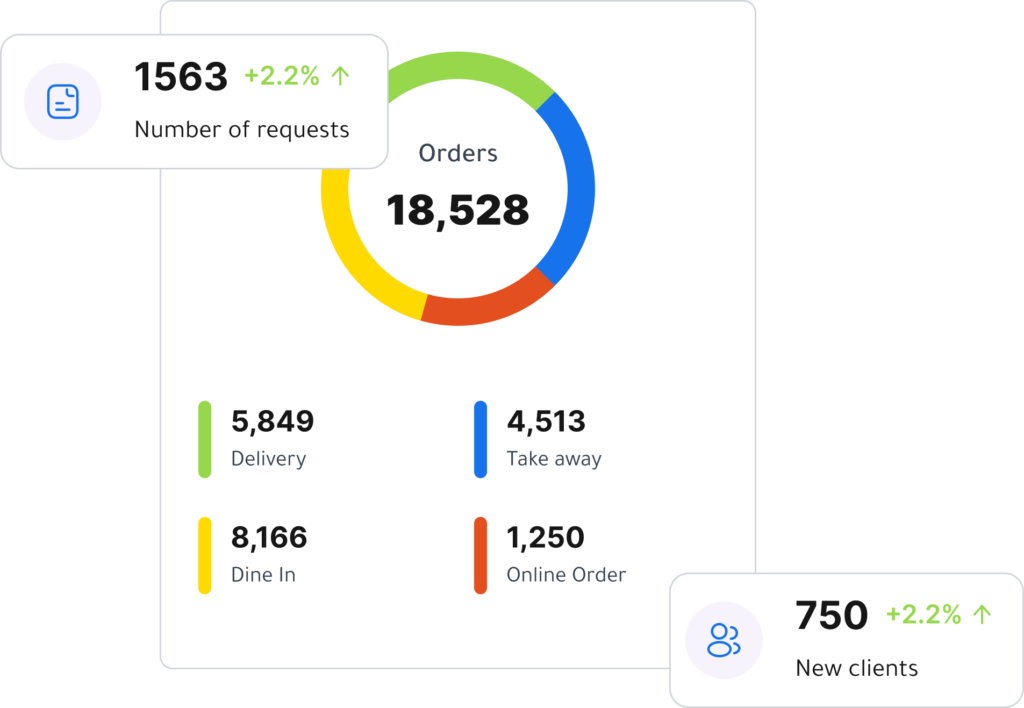
POS systems generate detailed reports on sales performance, best-selling products, and peak hours. These insights help management improve strategies, optimize menus, and identify new business opportunities.
Best Practices for Digital Transformation in Restaurants
Choosing the Right POS System
Selecting the right POS system is crucial for business success. It should match operational needs, offer ease of use, and integrate with other systems. A scalable solution that grows with the business is always recommended, especially one that provides real-time reporting and order management capabilities.
Continuous Staff Training
The success of any cashier software depends on how well the staff can use it. Continuous training helps reduce errors, improve efficiency, and ensure smooth adoption of new systems across the team.
Integration with Other Systems
A modern sales management system should integrate with accounting software, delivery platforms, and inventory tools. API integrations help unify data, reduce manual work, and ensure accurate operations across all channels.
Focusing on Customer Experience
The main goal of digital transformation is to improve customer experience. Faster service, multiple payment options, and personalized offers all contribute to higher customer satisfaction and loyalty.
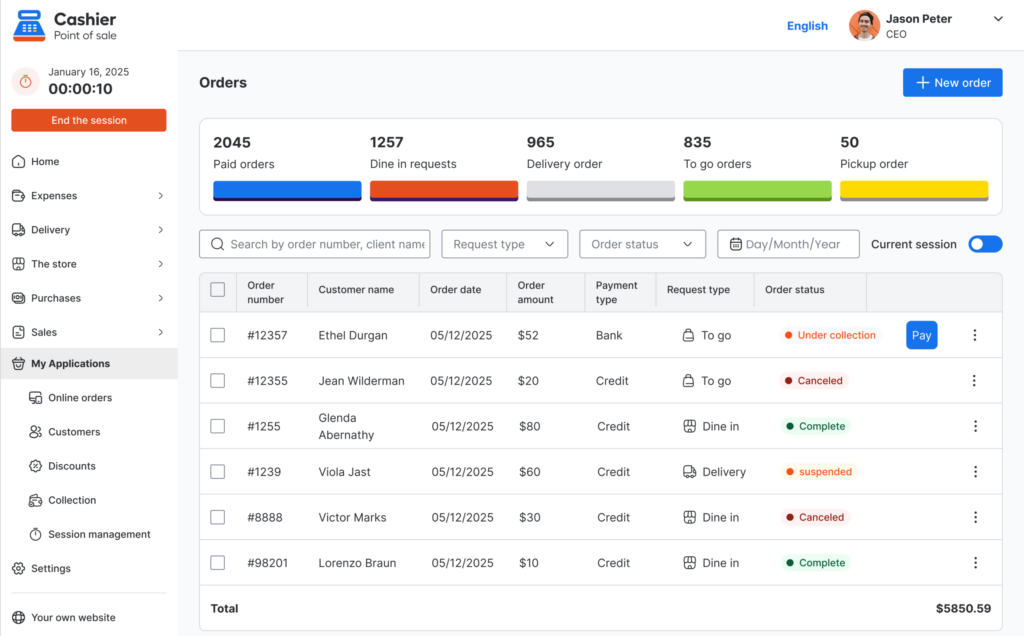
Modern Technologies in POS Systems
Cloud Computing
Cloud-based POS systems allow business owners to access data from anywhere, providing flexibility and real-time business control. It also ensures synchronization across multiple branches and reduces data inconsistency.
Digital Payments
Digital payment options have become essential in modern restaurants. Supporting cards, mobile wallets, and contactless payments improves customer convenience and speeds up transactions.
Smart Analytics
Advanced analytics tools help businesses understand customer behavior, identify trends, and improve marketing strategies. This leads to better menu planning and improved profitability.
Offline Mode Operation
One of the most important features of a modern POS system is offline functionality. It ensures uninterrupted operations even during internet outages by storing data locally and syncing automatically once the connection is restored.
Role of Cashier POS in Digital Transformation
Cashier POS is a strong example of a modern solution designed to help restaurants and cafés achieve digital transformation with ease. It provides a complete cashier system that supports sales management, inventory tracking, and employee management, along with detailed reporting tools that help business owners make informed decisions.
Beyond daily operations, Cashier POS enhances overall business performance by offering insights into customer behavior, identifying high-profit products, and improving cost management. This directly contributes to increased profitability and stronger market competitiveness.
Cashier POS is also designed with a user-friendly interface, making it suitable even for non-technical staff. This reduces training time and improves operational efficiency.
Additionally, Cashier POS supports both online and offline modes, ensuring uninterrupted operations even during internet disruptions. All data is securely stored and synchronized automatically once the connection is restored, ensuring stability and reliability.
Challenges of Digital Transformation
Despite its benefits, digital transformation comes with certain challenges that restaurants may face:
- Employee resistance to change, as some staff may prefer traditional methods.
- Initial investment costs for implementing a POS system.
- The need for continuous training to keep up with system updates.
Other challenges may include limited technical infrastructure or difficulty choosing the right system from many available options.
However, with proper planning and the right POS solution like Cashier POS, these challenges can be overcome and transformed into opportunities for growth.
How to Start Your Digital Transformation Journey
To successfully begin digital transformation, businesses should follow a structured approach. It starts with analyzing operational needs, including order volume, number of branches, and current challenges. Then, selecting the right POS system that matches these needs is essential.
Staff training plays a key role in ensuring smooth adoption and minimizing operational errors. After implementation, continuous monitoring of system performance through analytics is necessary to optimize processes.
It is also recommended to implement digital transformation gradually, starting with a pilot phase before full deployment. Choosing a reliable system like Cashier POS ensures a smoother transition and better long-term results.
Organize your sales in seconds with Cashier POS!
Take control of sales and users in moments, and give your business a fully integrated system that runs smoothly.
Get Started For FreeFrequently Asked Questions (FAQ)
The best POS system is one that fits your operational needs, offers inventory management, reporting tools, ease of use, and scalability like Cashier POS. Integration with other systems is also important.
Yes, modern POS systems like Cashier POS support offline mode, allowing operations to continue during internet outages with automatic data syncing later.
There is no real difference; POS (Point of Sale) is the global term, while cashier system is its local equivalent. Both refer to systems used for managing sales operations.
Yes, regular updates and technical support are essential to ensure security, performance improvements, and new feature enhancements.
Conclusion
Digital transformation is no longer optional; it is essential for restaurants and cafés aiming to succeed in a highly competitive market. Technology has become a core component of daily operations, improving efficiency, enhancing customer experience, and driving long-term growth.
By adopting an advanced POS system like Cashier POS, restaurants can significantly improve operational efficiency, reduce errors, speed up sales processes, and gain valuable insights for strategic decision-making.
Moreover, investing in modern POS solutions not only improves internal operations but also enhances customer satisfaction and loyalty, ultimately leading to sustainable business growth and increased profitability. Choosing a complete cashier system is therefore a strategic investment in the future success of any restaurant business.